

Evolution Of EAM: Top Trends In Asset-Intensive Industries
When Technology Advances But Results Don’t Follow
Rizing recently collaborated with Canam Research to explore how leaders in asset-intensive industries incorporate technology to maximize asset utilization. While modern Enterprise Asset Management (EAM) systems have the potential to increase ROI, successful deployment necessitates a seamless integration of technology, data, human adoption, and processes, which many organizations fail to achieve.
In asset-intensive industries, the promise of modern technology has never been greater. Cloud platforms, mobile functionality, predictive analytics, and AI-powered insights are rapidly reshaping what’s possible for enterprise asset management (EAM).
Yet for many organizations, the results haven’t kept up with the investment. Despite their best efforts, companies still struggle on the path to data maturity, hindered by outdated systems, fragmented data, and organizational resistance.
This report explores where the gap lies. Drawing on insights from professionals in manufacturing, utilities, transportation, chemicals, construction, mining, and oil & gas, the report reveals that technology alone is not the problem. Instead, most organizations face deeper challenges tied to process adoption, system integration, and user readiness.
Key Takeaways at a Glance
Explore the full infographic below for detailed survey data.
- Cloud adoption is increasing, but results vary: 52% of organizations now operate their ERP in the cloud. Yet satisfaction with EAM tools remains low, just 12% of respondents would recommend their current system.
- Process maturity is overestimated: 58% believe their organization is “very mature” in asset management, but only 18% say their processes are clearly defined and universally followed.
- Adoption challenges persist: 44% acknowledge serious or moderate lack of confidence in how well their asset management processes are being followed across teams.
- Data-driven decision-making remains aspirational: While 58% cite data insight as a top selection factor for EAM solutions, – only 40% feel confident in their organization’s data clarity and industry positioning.
01. A Mismatch Between Tools and Outcomes
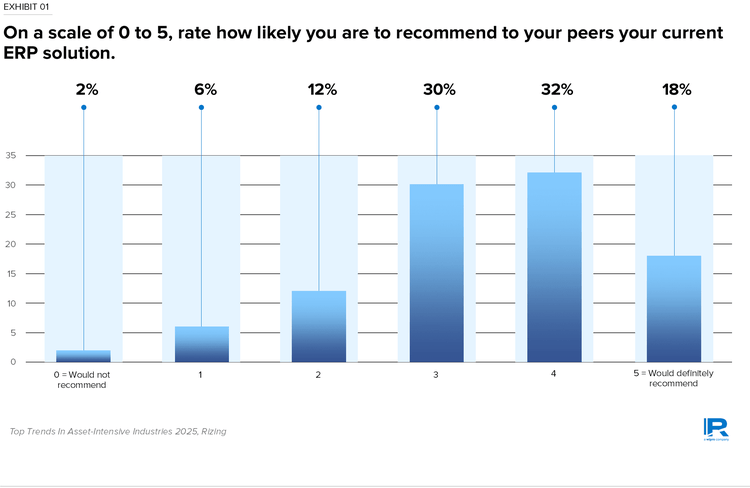
Only 12% of organizations describe themselves as promoters of their EAM solution. Meanwhile, 58% believe they have mature tools and processes which leaves a clear mismatch between perceived capability and user satisfaction. The data suggests that many systems are in place but aren’t consistently adopted or integrated into how asset management actually happens on the ground.
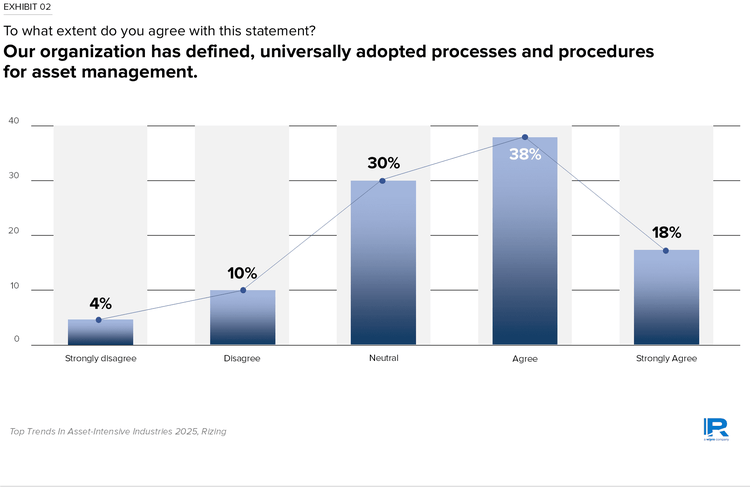
Survey respondents also pointed to limited confidence in their current processes, with only 18% saying their procedures are clearly defined and universally followed. Nearly half admit to significant gaps, whether in workflow clarity, consistency, or end-user training.
02. Cloud Adoption Is Advancing, But Not Equally
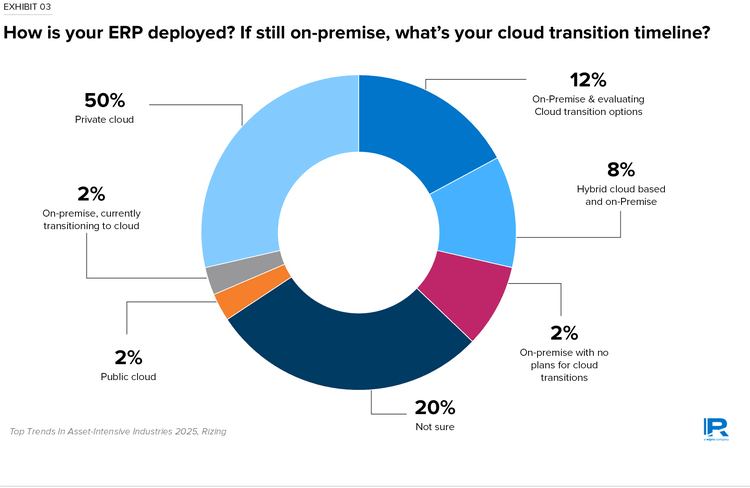
The move to cloud ERP is well underway: 52% of respondents have already transitioned, and most of the rest are planning to do so within a year. Still, 6% of organizations remain fully on-premise with no plans to change.
For many, cloud adoption promises real benefits, automatic updates, integration capabilities, and mobile access. But cost, ROI concerns, and complexity are slowing some transitions. Without clearly defined migration plans and total cost of ownership models, cloud deployments risk becoming just another isolated tech investment.
In asset-intensive industries, the promise of modern technology has never been greater. Cloud platforms, mobile functionality, predictive analytics, and AI-powered insights are rapidly reshaping what’s possible for enterprise asset management (EAM).
Yet for many organizations, the results haven’t kept up with the investment. Despite their best efforts, companies still struggle on the path to data maturity, hindered by outdated systems, fragmented data, and organizational resistance.
Download the full report to explore how industry leaders are tackling the four critical factors to maximize ROI and stay ahead of future challenges.